As the building industry searches for insulation
solutions that balance performance, cost, and
sustainability, it’s clear there’s no single material that
checks every box.
Written by Katie Freeze-Becker LEED AP, WELL AP, Fitwel Ambassador Director
This overview explores four greener insulation options, highlighting their strengths, limitations, and best‑fit applications. By understanding these tradeoffs, project teams can make more informed, climate‑resilient decisions.
There is no “one size fits all” insulation material, but differing levels of performance, budget and health concerns can all be used to inform product selections based on project typology, location and ownership priorities.
We encourage you to use this cheat sheet to think about healthy, environmentally friendly solutions in your next design.
ESG Strategy I Decarbonization I High Performance Buildings I Certification
FIBERGLASS
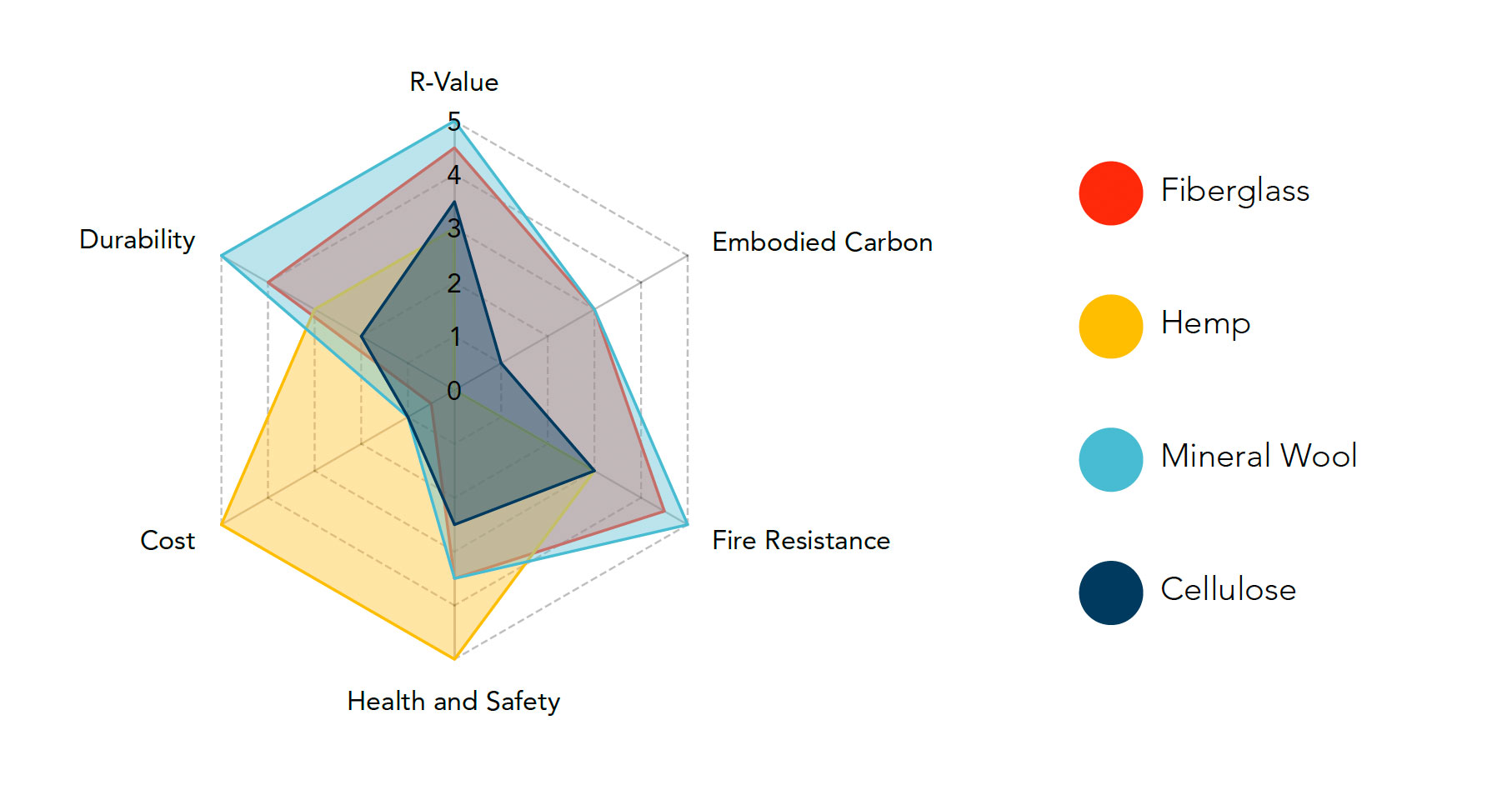
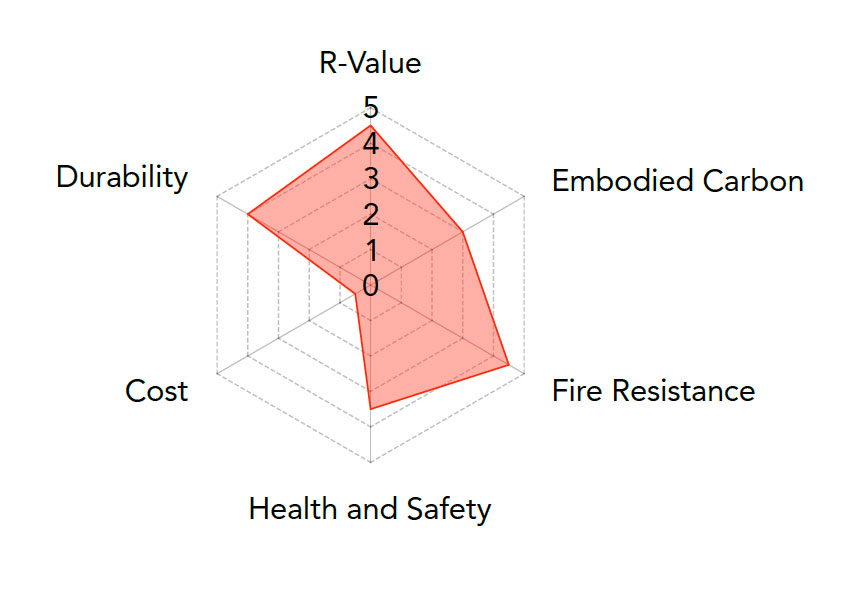
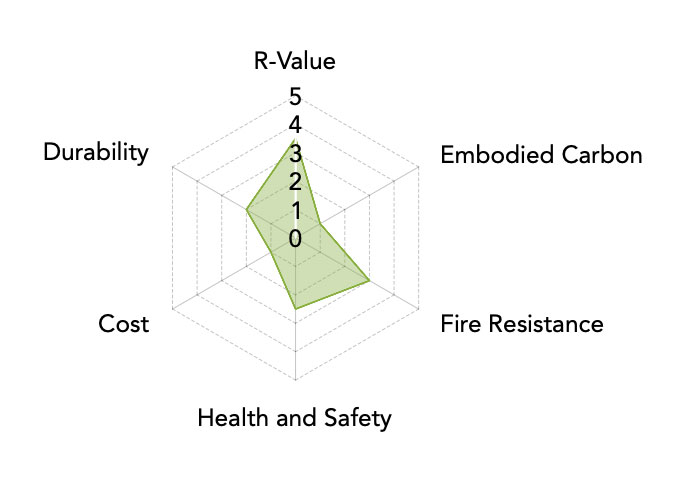
Pros: Relatively low cost ($0.50/SF); high performance (R-value of 3.7 for high-density batts); resistant to fire, mold, and moisture damage.
Cons: Relatively high in embodied carbon; formaldehyde-based binders pose moderate health concerns for construction teams, although some manufacturers are transitioning towards bio-based binders.
Best For: Projects with a limited budget.
HEMP
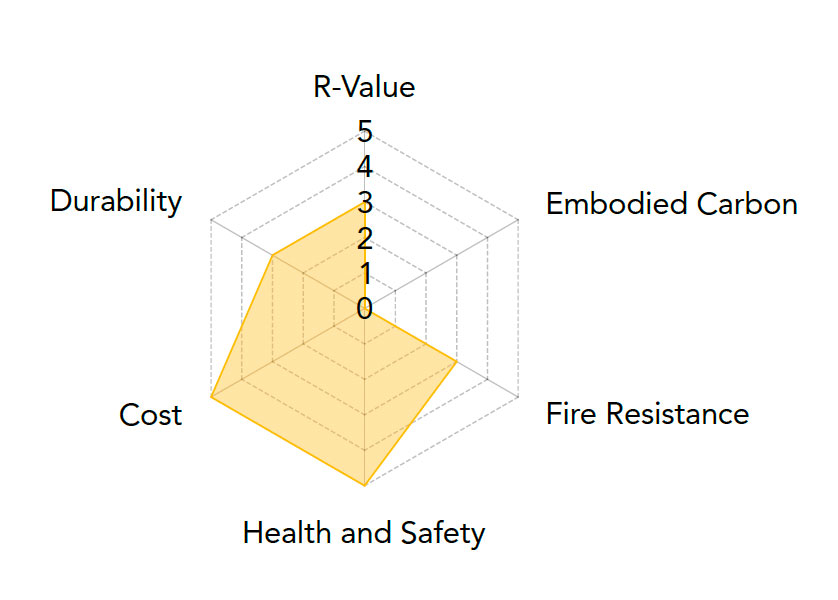
Pros: Highest performer in terms of embodied carbon; carbon neutral or carbon negative. Health and safety risks to contractors negligible.
Cons: Very high cost ($19/SF); Low R-value (2.3) translates to low effectiveness as an insulator and reduced energy efficiency.
Best For: For: Small boutique applications; not recommended in cooler climate zones (4 and above).
MINERAL WOOL
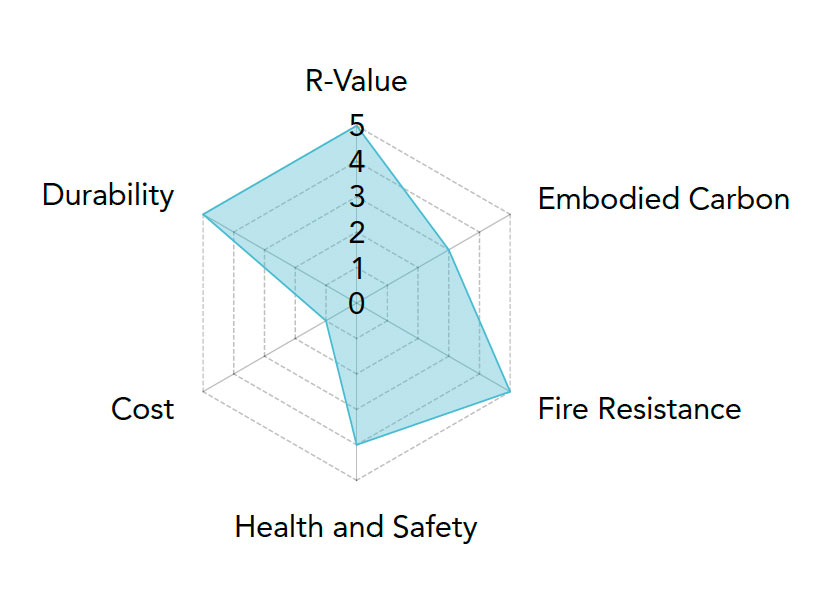
Pros: Highest performer in terms of R-value (4.0); highest resistance to fire, mold, and moisture damage; high recycled content.
Cons: Relatively high in embodied carbon (comparable to fiberglass); most manufacturers use formaldehyde-based binders, although there are exceptions. Cost is higher than fiberglass ($1.50/SF).
Best For: Continuous insulation applications; passive survivability; acoustical performance.
CELLULOSE
Pros: High performer with regards to embodied carbon; low health and safety risks; much lower cost than hemp ($1.50/SF).
Cons: High flammability requires heavy treatment with fire retardant, posing health and safety risks to contractors. Lower durability than other options.
Best For: Projects with ambitious embodied carbon targets.